Sunday, March 05, 2023

Navigating the NEET Exam: A Comprehensive Guide for Aspiring Medical Professionals

The National Eligibility and Entrance Test (NEET) is a highly competitive entrance examination for aspiring medical professionals in India. It is the gateway to admission into various undergraduate medical programs, including MBBS, BDS, and AYUSH courses.

(Image courtesy: www.career360.com)

NEET Eligibility Criteria

To be eligible for the NEET exam, candidates must meet the following criteria:

  • Age: Candidates must be at least 17 years old on December 31st of the year of admission.
  • Educational Qualification: Candidates must have passed the Class 12 board examination with Physics, Chemistry, and Biology as compulsory subjects and English as an optional subject.
  • Percentage: Candidates must have secured a minimum of 50% marks in Physics, Chemistry, and Biology individually and 40% marks for candidates from reserved categories.

NEET Exam Pattern

The NEET exam consists of two papers:

  • Paper I: This paper consists of 180 multiple-choice questions (MCQs) from Physics, Chemistry, and Zoology. Each subject carries 54 MCQs.
  • Paper II: This paper consists of 108 MCQs from Botany and 72 MCQs from Physics, Chemistry, and Zoology.

The total duration of the NEET exam is three hours and 15 minutes.

NEET Syllabus

The NEET syllabus covers a wide range of topics from Physics, Chemistry, and Biology. The syllabus is based on the NCERT Class 11 and Class 12 curriculum.

Preparation Tips for the NEET Exam

Here are some tips to help you prepare for the NEET exam:

  • Start early: Begin your preparation as early as possible to give yourself ample time to cover the vast syllabus.
  • Create a study schedule: Develop a consistent study schedule and stick to it.
  • Focus on NCERT textbooks: NCERT textbooks are the most important resource for NEET preparation.
  • Practice regularly: Solve as many mock tests and practice papers as possible to improve your speed and accuracy.
  • Join a coaching institute: Consider joining a coaching institute for structured guidance and support.
  • Stay motivated: Stay motivated throughout your preparation journey by focusing on your goals and setting achievable targets.

NEET Exam Dates and Registration

The NEET exam is typically held once a year in May. The registration process for the NEET exam usually begins in March or April of the examination year.

NEET Exam Results and Counselling

The NEET exam results are typically declared within a month of the exam. Based on the NEET results, candidates are eligible for counselling for admission into various medical colleges across India.

Conclusion

Cracking the NEET exam requires dedication, hard work, and a strategic approach to preparation. By following the tips provided in this blog post and utilizing the available resources effectively, you can increase your chances of success in achieving your medical aspirations. Remember, consistency, perseverance, and smart study habits are key to excelling in the NEET exam.

Additional Resources

Remember, you are not alone in this journey. There are many resources available to help you succeed. With hard work and determination, you can achieve your dream of becoming a medical professional.

Sunday, February 05, 2023

Cracking the JEE Main & JEE Advanced: A Comprehensive Guide for Aspirants

The Joint Entrance Examination (JEE) is a standardized test in India for admission to undergraduate engineering programs and other technical courses at Indian Institutes of Technology (IITs), National Institutes of Technology (NITs) and other centrally funded technical institutions (CFTIs), as well as some private engineering colleges. In addition to the above, JEE score is also used by several state government engineering colleges for admission.

The JEE comprises two separate examinations: JEE Main and JEE Advanced. JEE Main is a screening test for JEE Advanced, while JEE Advanced is the final exam that determines admission to the IITs and NITs.

JEE Main Syllabus:

  • Physics: Mechanics, Thermodynamics, Electricity and Magnetism, Optics, Waves, Modern Physics
  • Chemistry: Physical Chemistry, Inorganic Chemistry, Organic Chemistry
  • Mathematics: Algebra, Trigonometry, Calculus, Coordinate Geometry, Vector Algebra, Statistics

JEE Advanced Syllabus:

  • Physics: Mechanics, Thermodynamics, Electricity and Magnetism, Optics, Wave Mechanics, Modern Physics
  • Chemistry: Physical Chemistry, Inorganic Chemistry, Organic Chemistry
  • Mathematics: Algebra, Trigonometry, Calculus, Coordinate Geometry, Vector Algebra, Statistics

Preparation Tips:

  • Start Early: The earlier you start preparing, the more time you will have to cover the vast JEE syllabus.
  • Join a Coaching Institute: A coaching institute can provide you with structured guidance and help you stay on track.
  • Practice Regularly: Practice is key to success in any exam. Make sure to solve as many practice papers as possible.
  • Stay Motivated: JEE preparation can be challenging, but it is important to stay motivated and focused on your goals.
  • Time Management: Time management is crucial during the exam. Make sure you allocate enough time for each question and avoid spending too much time on any one question.
  • Accuracy: Accuracy is more important than speed. Make sure you answer each question correctly, even if it takes you a little longer.
  • Revision: Revision is essential before the exam. Make sure you revise all the important concepts and formulae.
  • Healthy Lifestyle: A healthy lifestyle is important for both physical and mental well-being. Make sure you eat healthy, get enough sleep, and exercise regularly.
  • Positive Attitude: A positive attitude can go a long way in helping you succeed. Believe in yourself and your abilities, and never give up.

Additional Resources:

Some additional tips that you may find helpful:

  • Make a study schedule and stick to it.
  • Find a study partner or group to motivate you and help you stay on track.

Sunday, January 01, 2023

Importance of Education - The Value brings by a Good Education


"Education is the most powerful weapon which you can use to change the world.” 

- Nelson Mandela.


Everyone needs access to quality education if they are to lead fulfilling lives. There are several ways to get an education, including classroom instruction, formal training, and research. People who have completed their education can find success in a variety of fields.

Acquiring knowledge about oneself and the world around is what we mean when we talk about education. A school-based education is known as a formal education. There are numerous more locations where people can learn, such as from their family, friends, and travels. Being educated has many positive effects on a person's life. These are a few examples:
  • Education provides stability and financial security: Education helps people to find better career opportunities and earn higher incomes. It also teaches them how to manage their money and save for the future.
  • Education promotes equality and social justice: Education gives everyone an equal chance to access information, resources, and opportunities. It also fosters respect for diversity and human rights.
  • Education enhances personal growth and development: Education stimulates the brain and improves cognitive skills such as memory, creativity, problem-solving, and critical thinking. It also helps people to discover their passions and talents.
  • Education contributes to global peace and development: Education raises awareness of local and global issues such as poverty, health, environment, and democracy. It also encourages people to take action and participate in civic life.

To sum up, a good education is among the most important things we can have. It helps us out individually, but it also gives us the tools to change the world for the better. Consequently, we should all encourage and facilitate the pursuit of education to the fullest extent feasible.

Sunday, December 25, 2022

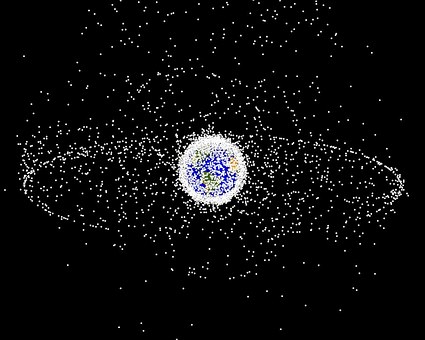
Space Debris - how deadly is it?


How fascinating is this image?

Do you know what is this?
.
.
.
These are the very small particles or debris of objects which floats in space at a staggering speed of a few hundred kilometer/s. And you know, they are so faster than they can even destroy the satellite or other objects which come in their path (even with a small size of 10 cm).

<head>
<!-- Google tag (gtag.js) --> <script async src="https://www.googletagmanager.com/gtag/js?id=AW-325136247"></script> <script> window.dataLayer = window.dataLayer || []; function gtag(){dataLayer.push(arguments);} gtag('js', new Date()); gtag('config', 'AW-325136247'); </script>

Space exploration led to the many advantages and development of technologies that are beneficial for humans. But the one thing which is a matter of concern is that it will also lead to the generation of waste in space. We, human beings, neither bother about the Earth's environment nor do we concerned about the space near the Earth's atmosphere or outside space.

And as space travel becomes a reality, with the entrance of private players like SpaceX, Blue Orange, and Virgin Galactic chances of more debris in space are higher.

There is a need to tackle this issue with great concern and utmost priority otherwise the boom we are getting with space exploration and satellites will become a bane in the near future.

From Leaks to Legacy: Exploring the Plumber’s Profession

  A  career as a plumber is one of the most practical, stable, and rewarding trades, offering opportunities in residential, commercial, and ...